What is WorldSkills? The Olympics of Skilled Trades
WorldSkills is the world's biggest skills competition - often called the "Olympics of skills" - where young professionals compete from across the world every two years. With a global age limit of 23 and a strict once-in-a-lifetime rule, it's intense, unforgettable, and nothing like a regular workday. Here's what it actually is, how IT fits into it, and what I personally took away from competing.
 Olvasd el magyarul
 Auf Deutsch lesen
 阅读中文版
阅读中文版What is WorldSkills?
WorldSkills is a global organization and competition that brings together young skilled professionals from over 80 countries. The competition is held every two years, rotating across different countries and cities - there's no permanent home, which means every edition feels like a new chapter. The most recent competition was WorldSkills Lyon 2024 in France, and the next is WorldSkills Shanghai 2026.
People often call it the Olympics of skills, and that comparison holds up well. Like the Olympics, it's a massive, globally watched event where the best in each trade compete for gold. But there's one key difference: in WorldSkills, you can only compete once. No returning champions. No second shots. You get your window, and then you pass the torch.
The age limit for WorldSkills is 23 years. If you're older than that, your eligibility window has closed. This creates an intense, youth-driven energy at the event - everyone competing knows this is their one shot.
EuroSkills: the European counterpart
EuroSkills is the European edition of the same concept, organized by WorldSkills Europe and held every two years as well - but on a different cycle from the global competition, so together they fill the calendar nicely. EuroSkills gathers competitors from around 36 European countries, and the age limit is slightly higher at 26 years old, allowing for a wider talent pool.
Like the global competition, EuroSkills rotates between cities - recent editions have been held in Graz, Budapest, Gdańsk, and Herning.
How is IT represented?
IT has a strong presence at both WorldSkills and EuroSkills. The main technology skills include:
- Web Technologies - the skill I competed in. Covers frontend and backend development, UI design, databases, and full-stack problem solving.
- IT Network Systems Administration - infrastructure, networking, server configuration, and system troubleshooting.
- IT Software Solutions for Business (Software Development) - software development tailored to business automation and custom solutions.
- Cybersecurity - a newer skill covering threat protection, network defense, and secure system design.
- And more - including Cloud Computing, Data Science, and others. You can browse the full list on worldskills.org/skills.
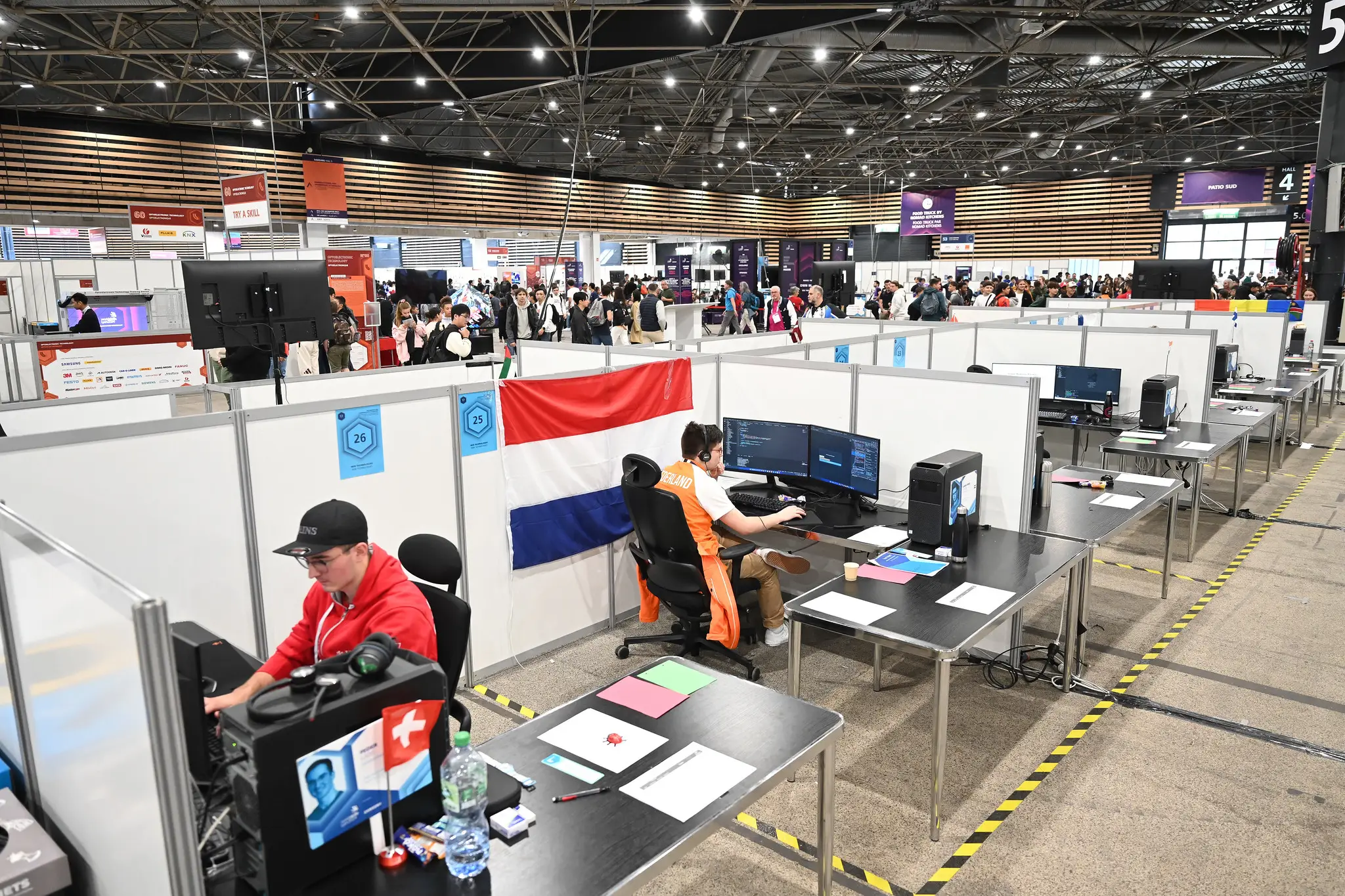
One important detail: WorldSkills competitions run in strictly controlled environments. No internet access, no AI tools. Everything you produce comes from memory and practice. Competitors work in isolation, often for three to four hours per module, solving tasks that would typically take software teams weeks.
Whether that changes in the future remains to be seen - the world of AI is moving fast, and competition formats may eventually reflect that. But for now, it's pure skill under pressure.
What it actually teaches you
Competing in WorldSkills changed how I work. Not in an abstract motivational-poster way - in very concrete ways.
Discipline and speed. You learn to write clean, functional code faster than you ever thought possible.
Three hours to build something that takes a normal team two weeks forces you to develop instincts you just can't get in a classroom.
Problem solving under pressure. Not just in IT - in life. When you've debugged a complex issue in front of 400,000 people while your adrenaline is maxed out, other stressful situations feel manageable by comparison.
Time management. You have a fixed window. You can't negotiate scope. You learn to prioritize ruthlessly and ship, even when it's not perfect.
Soft skills. Competitions are social. Experts, judges, national coaches, officials - you navigate all of it. Communication matters. Asking the right question to a judge in the right way can save you ten minutes.
Handling adrenaline. This one sounds strange, but it's real. Competing with sleepless nights (four days of back-to-back competition days) while running on adrenaline teaches you to perform when everything in your body is telling you to slow down. That carries over.
Is it realistic? Not really - and that's the point
Let me be honest: WorldSkills is not what a real job looks like. In a real workplace you have AI (!), internet, documentation, Stack Overflow, Claude, and teammates to ask. You have deadlines measured in weeks or months, not hours.
WorldSkills deliberately strips all of that away. You compete on raw knowledge. A three-hour coding module where you're expected to produce a full working web application is not a realistic reflection of how software gets built. (At least before the AI era :D)
But that unreality is the challenge. The skills you build to survive those conditions - memory, speed, composure, pattern recognition - make you sharper in realistic environments too. It's like training at altitude. The race isn't run at altitude, but you're stronger for it.
Connections that last
If I had to name the single most valuable thing I got from WorldSkills, it wouldn't be the medals. It would be the people.
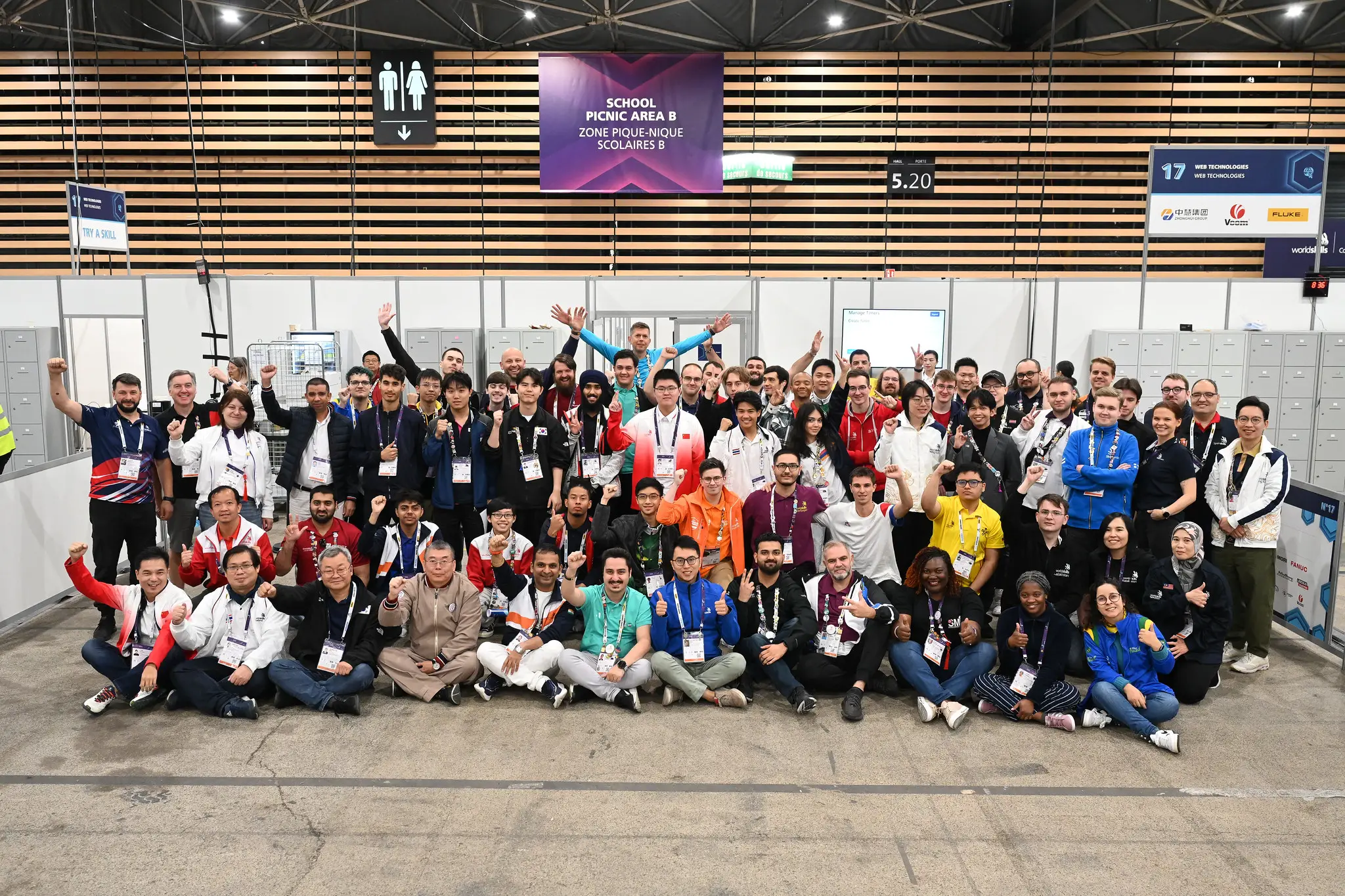
I made friends from countries across Asia, Europe, the Americas, and even from Africa - people I can message today, people I've collaborated with professionally, people I could call if I were traveling through their city and need dinner recommendations from a local. That network is real and it keeps giving.
Beyond fellow competitors, I've also met CEOs, company directors, and influential figures in the tech and vocational education space. These are people you wouldn't typically meet at a junior developer meetup. WorldSkills just puts you in the same room with them.
Seeing how other countries do IT
Traveling to competitions in different countries opened something I hadn't expected: a window into how different cultures approach technology. Watching competitors from China, South Korea, and other Asian countries work - their precision, their preparation methods, their weaknesses and strengths, the best practices they (usually don't) follow - gave me a perspective no textbook can offer.
You see what coding looks like internationally. You notice where your country's approach is ahead, and where it's behind. And beyond the IT side, you get to experience the culture, the food, the way of life. It matters.
In the next post, I'll go deeper into my personal WorldSkills and EuroSkills journey - where I competed, what happened, and what winning (or losing?) actually felt like.