My WorldSkills and EuroSkills Journey: 2 Gold Medals
From a 17-year-old who didn't win his first national competition, to a two-time gold medalist at WorldSkills Lyon 2024 and EuroSkills Herning 2025 - this is my full journey as I competed in the Web Technologies skill at WorldSkills. It covers the training, travel, nerves, and what happens when your country's name is finally called at the closing ceremony.
 Olvasd el magyarul
 Auf Deutsch lesen
 阅读中文版
阅读中文版What is WorldSkills (and EuroSkills)?
WorldSkills is the world's biggest international skills competition - often called the "Olympics of skills" - where young professionals compete across dozens of trades every two years. EuroSkills is the European edition, running on a different cycle. I wrote a full breakdown of how both competitions work, the IT skills represented, and what you actually learn from competing. Read that post first if you're new to WorldSkills.
How it started
I was 17 when my highschool teacher first introduced me to this competition. I didn't know much about it at the time, but I signed up for the first national selection round - and I didn't win. That could have been the end of it.
It wasn't. Something about that competition felt right. I felt like this could be my thing. So I kept going!
A year later, I took part in the national selection competition organised by SkillsIT and Szakma Sztár Fesztivál again. The winner of this competition would qualify for WorldSkills Lyon 2024. Two full days of competing. I had studied harder than I ever had before, and I won - meaning I'd represent Hungary on the world stage. The part I still think about: I was barely 18, hadn't even graduated high school yet, and I had just beaten every Hungarian university student who entered.
Training for WorldSkills Lyon 2024
After qualifying, I entered a preparation period that lasted about a year and a half. During this time I was sponsored by the Hungarian Chamber of Commerce and Industry (MKIK) and WorldSkills Hungary, which allowed me to train full-time.
The training involved solving real-world tasks and working through problems from previous WorldSkills competitions with the help of experts and coaches. At first, it was genuinely hard. The level was much higher than anything I had done before. But over time, the tasks that once felt impossible became routine. That shift in what feels "hard" is one of the most valuable things the process gave me.
The training competitions
Before Lyon, I got the chance to compete in three international training events. Each one was a lesson in more than just web development.
Finland was first. It was also my first time ever on a plane. I won the competition, which gave me a real taste of what an international competitive environment feels like. Amazing experience, very different from practicing alone in a training room.
South Korea was next. My first time in Asia. I arrived with six hours of jetlag and a culture shock I hadn't fully prepared for. Korea is also known for producing some of the strongest competitors in Web Technologies globally, so the pressure was real. I still managed to win. That result mattered a lot to me.
Taiwan was the third stop, and the most memorable. It was a massive competition - a huge venue, many countries, hundreds of competitors. By then I was getting more used to the jetlag and the rhythm of traveling to compete. I met a lot of great people, discovered a country I genuinely loved, and realized somewhere along the way that traveling had become a hobby I didn't know I had.
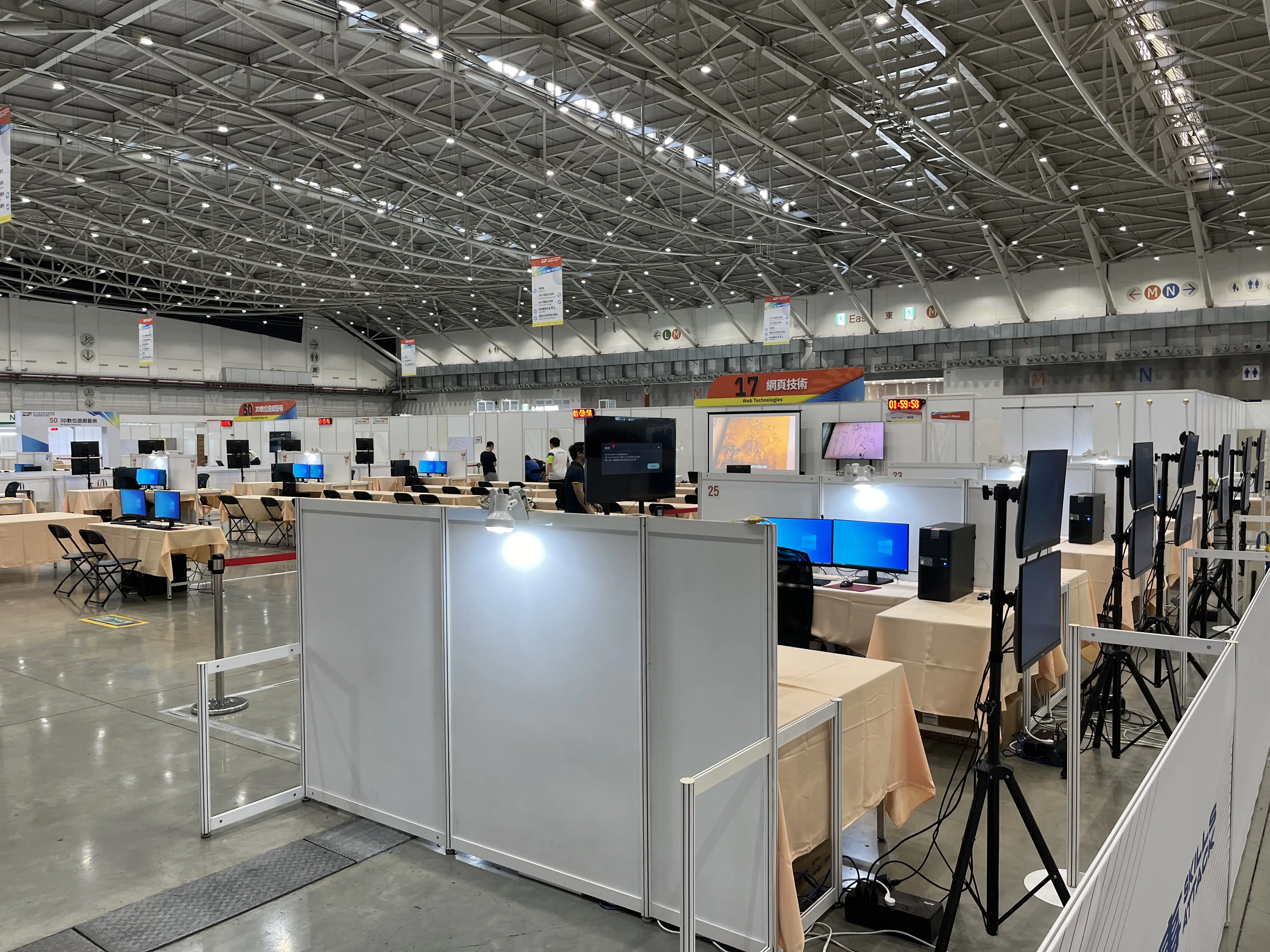
Taiwan changed something in me. I arrived as a competitor and left as someone who wanted to see every country on the map. That shift happened quietly, between competition days and late-night conversations with people from six different countries.
WorldSkills Lyon 2024
September 2024. Lyon, France. The 47th WorldSkills Competition. This was it.
I felt fully prepared going in. Nothing was gonna stop me - except the French food, which I struggled with more than I expected. Luckily there was a Five Guys nearby that saved the trip more than once! :)
The competition days
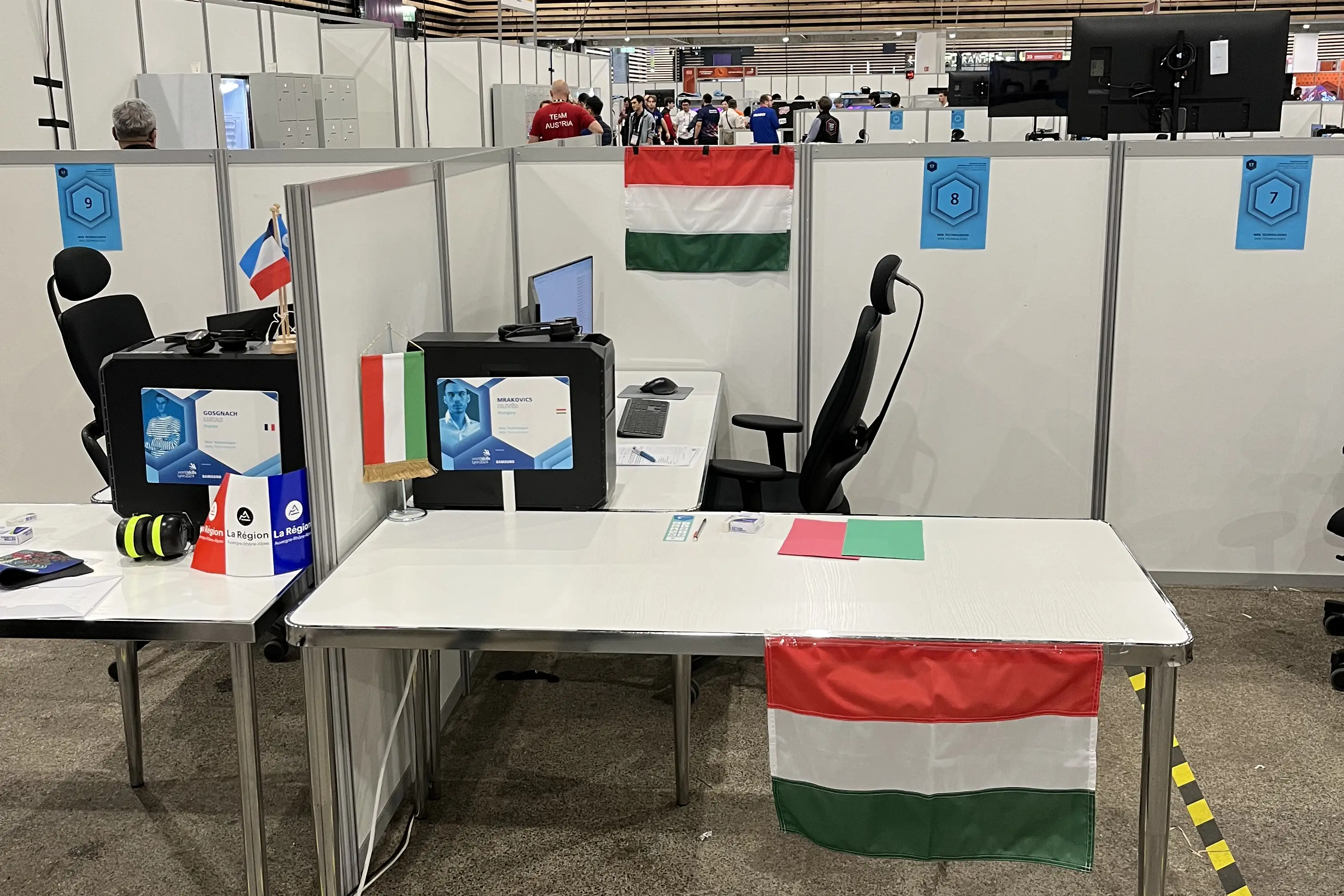
The event started with a familiarization day - getting to know the workspace, the equipment, and the other competitors. Then four competition days followed.
What most people don't realize is that the real pressure isn't just the competition hours. It's the time in between. Me, my expert, and previous competitors trained nonstop between sessions. Sleep was not a priority. Lunch and showers were finished in three or four minutes. Everything else was preparation.
WorldSkills provides the tasks three days in advance so competitors can read and familiarize themselves with them. Without that, it would be impossible to complete them without internet access. Even with that, the pace during the modules is relentless.
The competition itself went smoothly for me. No major technical issues. I finished each module satisfied with what I had produced.
The closing ceremony
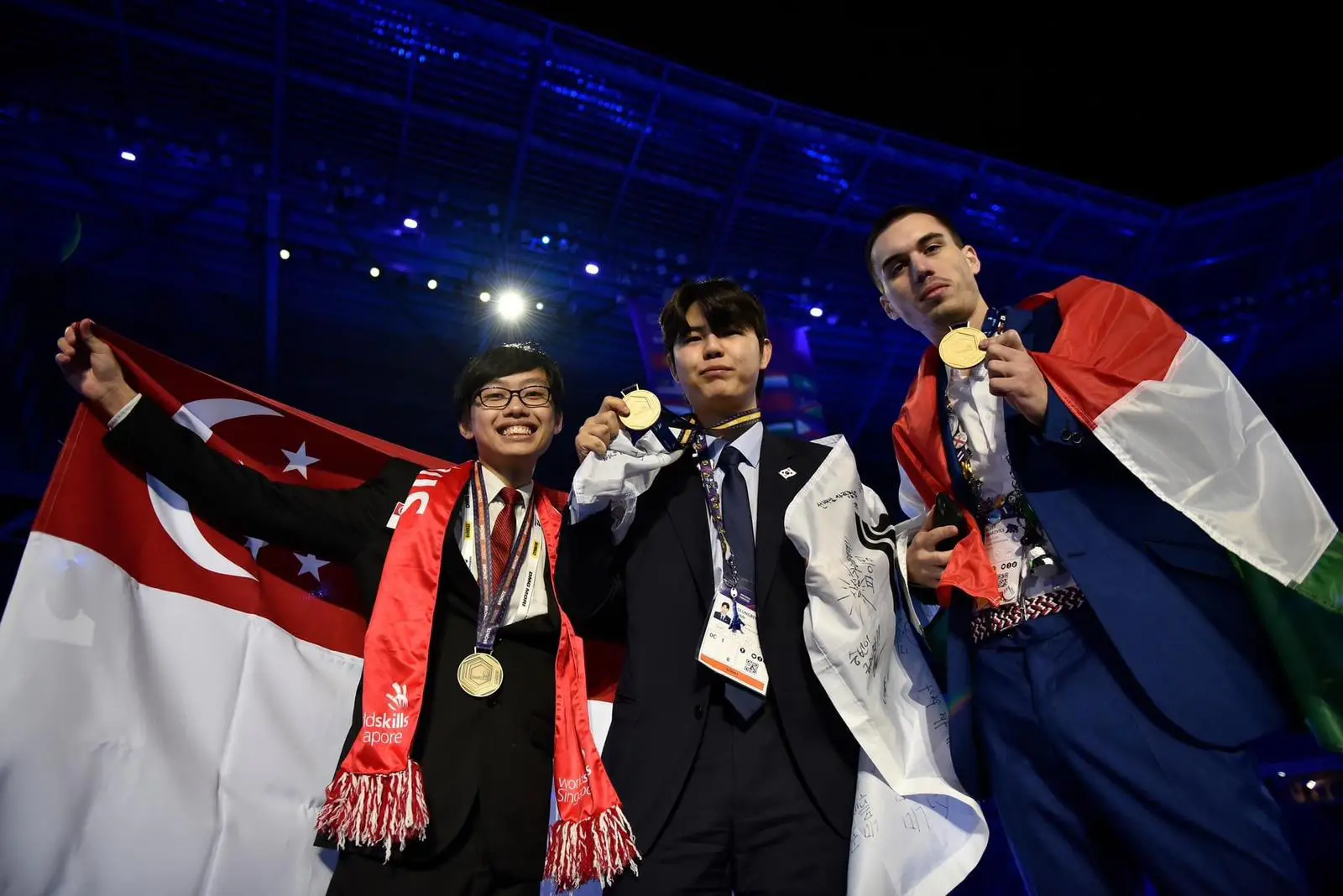
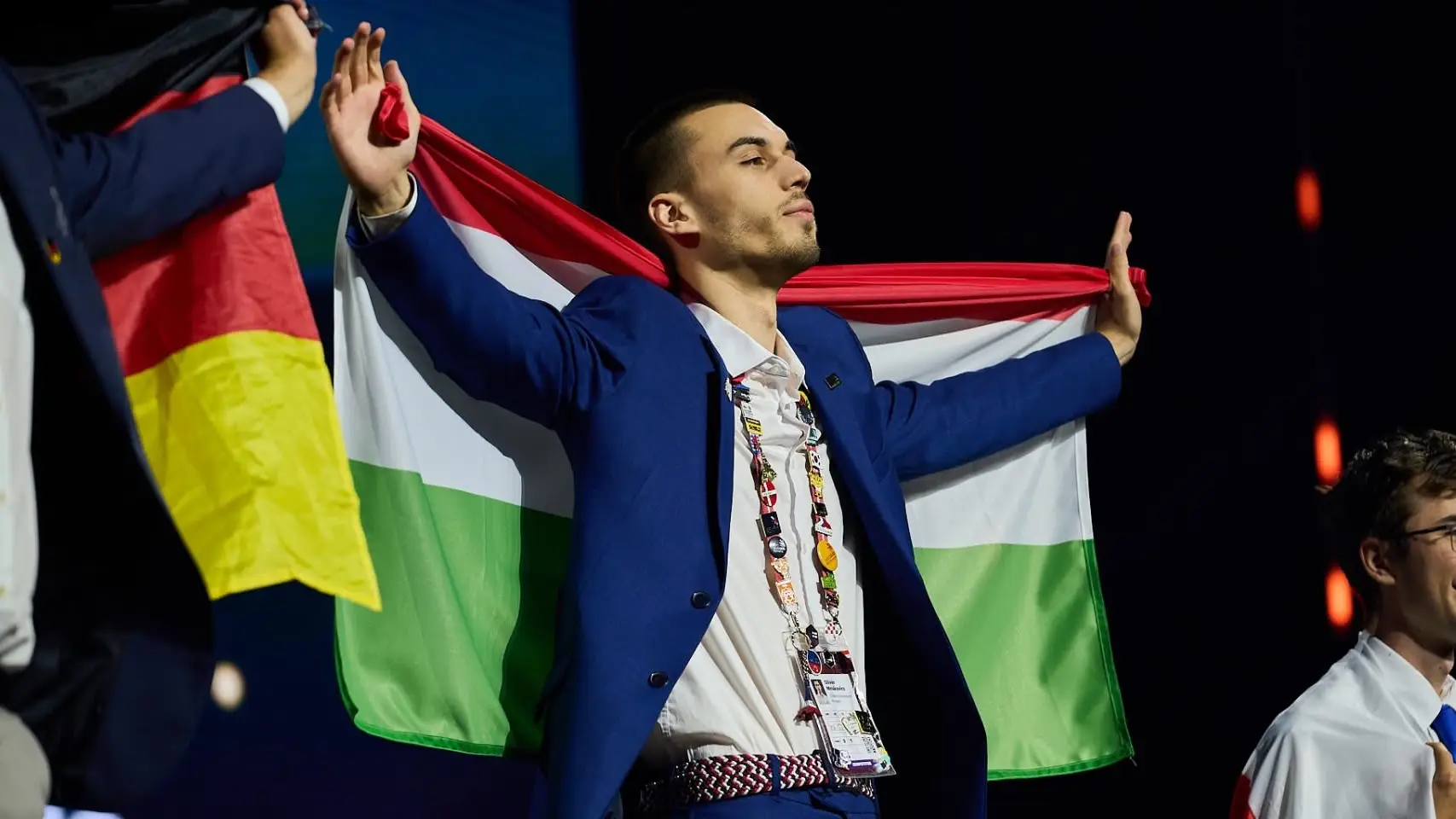
The closing ceremony was held in the Lyon soccer stadium. About 50 skills were being awarded that day, and Web Technologies was announced last. I sat in a suit through the entire ceremony waiting.
About ten to fifteen minutes before the public announcement, they quietly told the top three finishers to come to the podium. When I was called, I knew I was in the top three - but not yet which place.
Then it went live. Third place: Singapore. Then they announced there was no second place. That was the moment I knew. A moment later, it was official: Hungary and Korea had both won gold medals in Web Technologies. A shared first place, and completely fair - the Korean competitor and I had been neck and neck throughout the entire competition.
Coming home
Back in Budapest, Ministers and a crowd of people were waiting at the airport. In the weeks that followed, TV channels, organizations, and journalists wanted interviews. I'm not someone who particularly enjoys being in front of a camera, but I understood why it mattered - and I did it.
EuroSkills Herning 2025
A year later, I was back on the competition circuit for EuroSkills Herning 2025 in Denmark. Having already competed at WorldSkills, my preparation was lighter this time. I didn't need to rebuild everything from scratch - I just needed to stay sharp and not let what I knew get rusty.
Before Denmark, I had one training trip, to Guangzhou, China - though that competition was in software testing, unrelated to my skill. Still, China was a fascinating place to visit.
Denmark and the Skills Village
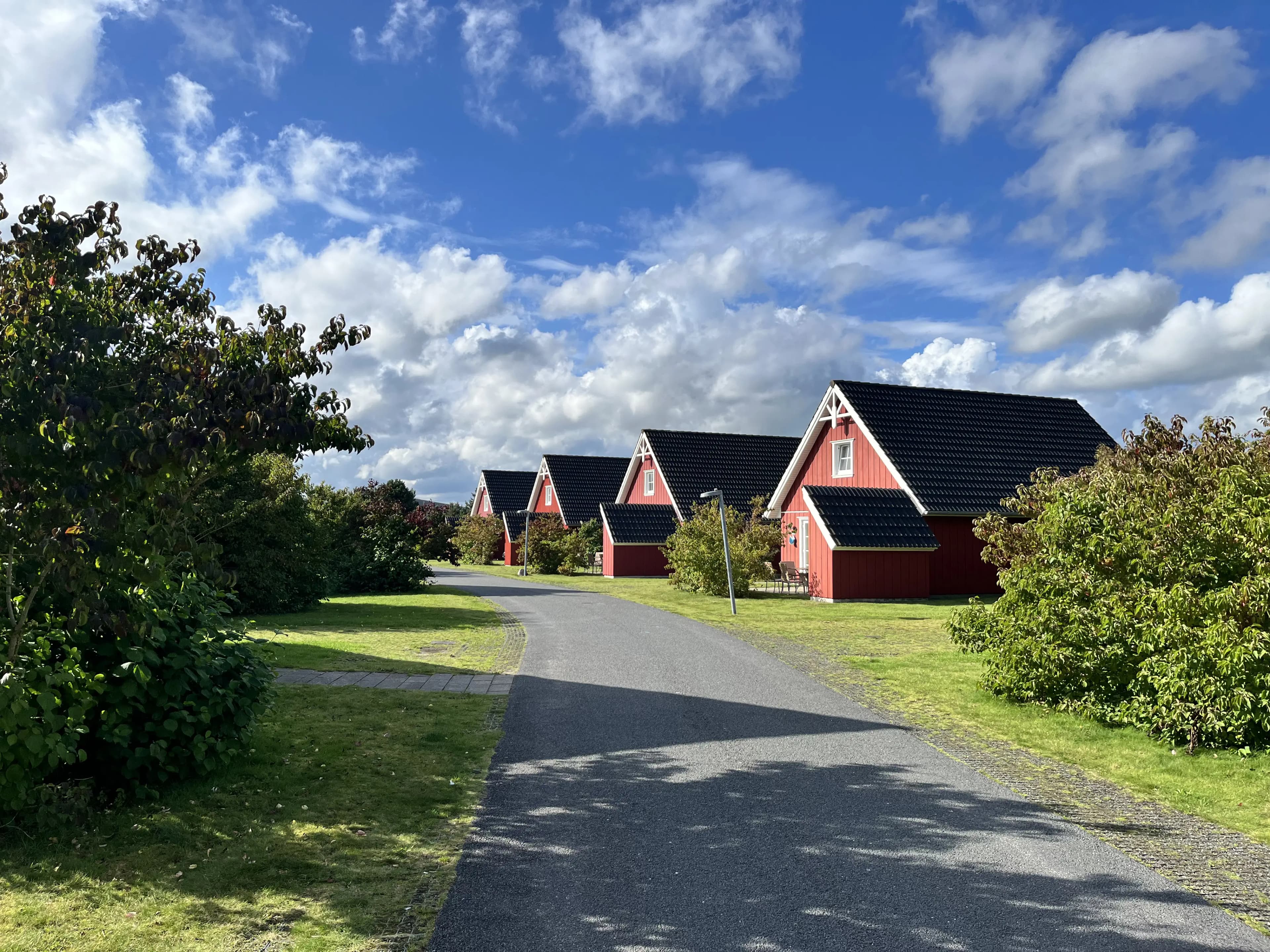
Arriving in Denmark, we had time before the competition to visit Legoland and explore some of the beautiful spots around Herning. The accommodation was different from Lyon too - instead of hotel rooms, competitors stayed in small cozy houses called the Skills Village. It gave the whole event a warmer, more community feel.
The competition
EuroSkills felt more manageable after Lyon. I won with 93%, while second place finished at 70%. The gap was significant. It wasn't complacency - it was the difference that a full WorldSkills preparation cycle makes when you bring it into a European-level competition.
Two competitions. Two gold medals. What's next?
I competed twice. I won both. And now I'm done - the age limits and the once-per-competition rule mean my chapter as a competitor is closed.
But the story doesn't end here. It shifts. The next step is helping train the competitors who come after me. Passing on what I learned in training halls in Finland, on competition floors in Korea, and in a stadium in Lyon waiting to hear my country's name called.
If you're just starting out and wondering whether this competition is worth the effort - it is. Not just for the medals. For everything else that comes with it.